Updates
Latest
News.
Company milestones, technical progress, and decisions made along the way. We write these for transparency, with investors, partners, and anyone following along.
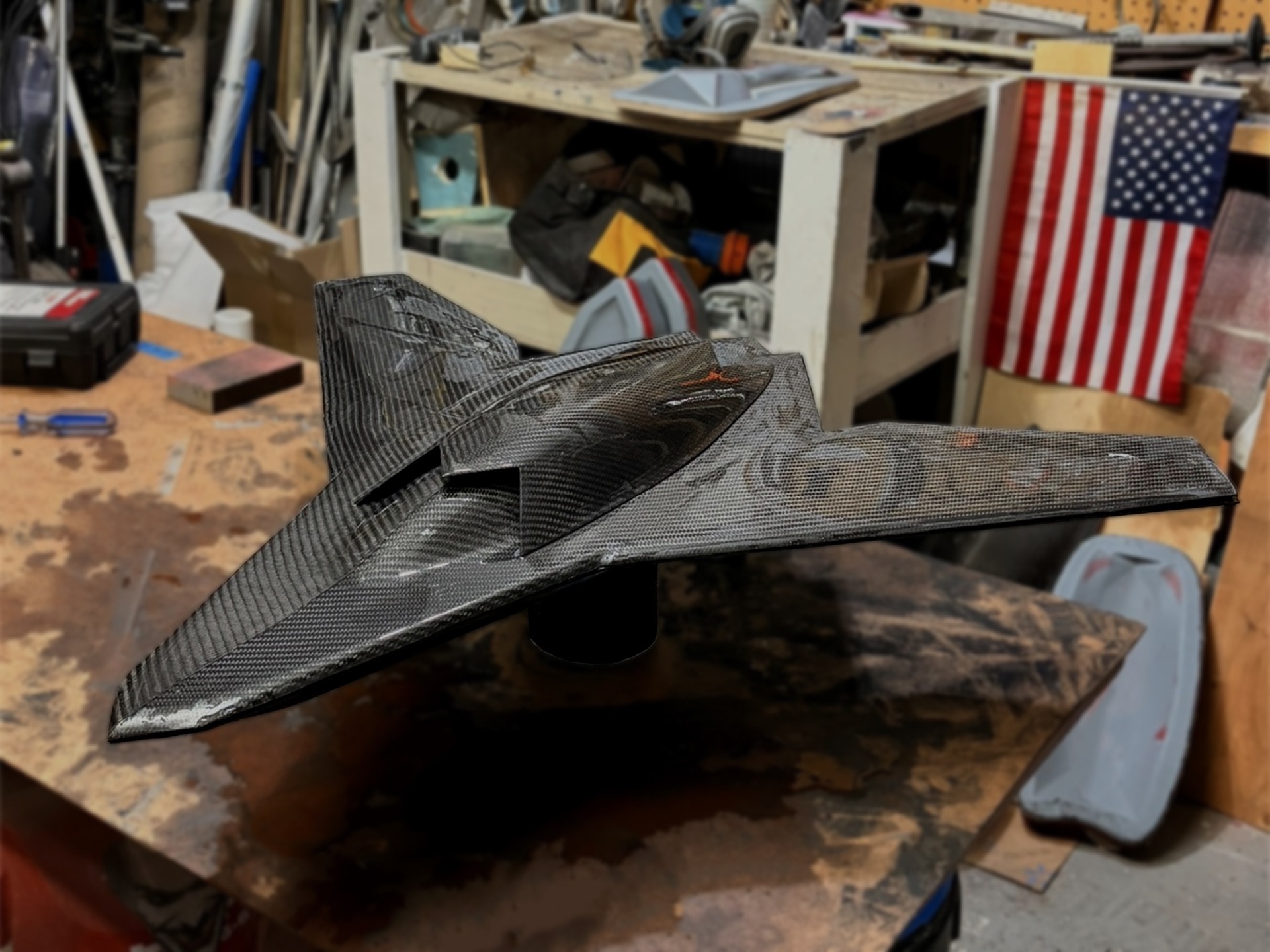
The first subscale Specter airframe is built. Carbon fiber composite, laid up and finished in house, and the first time the Specter has existed as a physical object rather than a render.
The point was never the model itself. It was the process. We needed to know whether a small team could produce a complex blended-wing-body shape in composites, to tolerance, without the hard tooling and headcount a program like this normally assumes. That question is now answered, and the same process is what we scale up from.
The airframe also gives us something to test rather than simulate. Next is wind tunnel work to validate the aerodynamic model, alongside computational signature analysis of the full-scale geometry.
To be clear about where this sits: this is a subscale article. It does not fly, it is not a prototype, and no full-scale hardware exists. What it establishes is a manufacturing baseline we can build the real aircraft on.
View the Specter ProgramSlade Technologies is registered in SAM.gov and has been assigned a CAGE code by the Defense Logistics Agency. Together these are the baseline requirement to receive a federal award — every entity that does business with the government has them.
Administrative groundwork, not a milestone and not a contract. We note it only because it's a prerequisite for the SBIR and procurement work ahead. Necessary, not notable.
Slade Technologies is actively pursuing Phase I SBIR funding through the Department of War. The effort targets programs aligned with our ISR and autonomous systems work, with a submission window closing in June 2026. A successful Phase I award would fund the initial feasibility study and establish Slade as an active federal research performer.
We're not going to detail which topics we're pursuing until after submission. That's standard practice. What we can say is that the Specter's mission architecture maps directly to documented capability gaps.
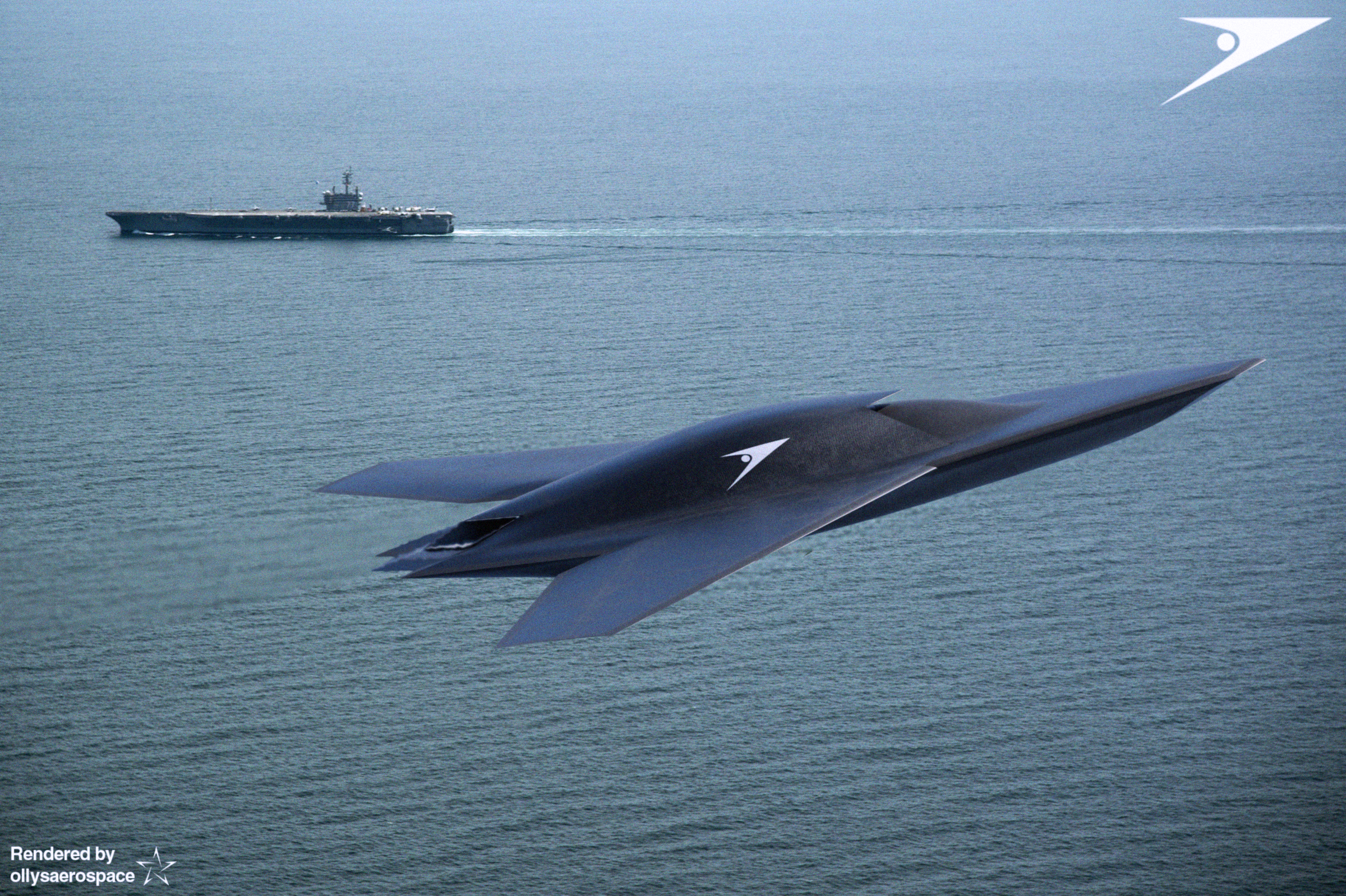
Slade Technologies is announcing the Specter Naval — a ship-compatible derivative of the Specter designed for distributed maritime operations across contested island chains.
The Specter Naval shares the same tailless blended-wing-body airframe as the Specter. Differences are configuration-level: reinforced landing gear, tail hook, corrosion-resistant coatings, and LHD/LHA deck compatibility. The same low observable profile, the same turbofan propulsion, the same SIGINT mission architecture — adapted for maritime basing without forward airfield dependency.
The Specter Naval is built around a specific operational reality: in a contested Indo-Pacific environment, persistent ISR cannot depend on prepared runways. A platform that can operate from a ship deck and recover conventionally at short austere strips changes the basing calculus entirely.
Like the Specter, the Specter Naval is a named concept design. No hardware exists and development has not commenced.
View the Specter Program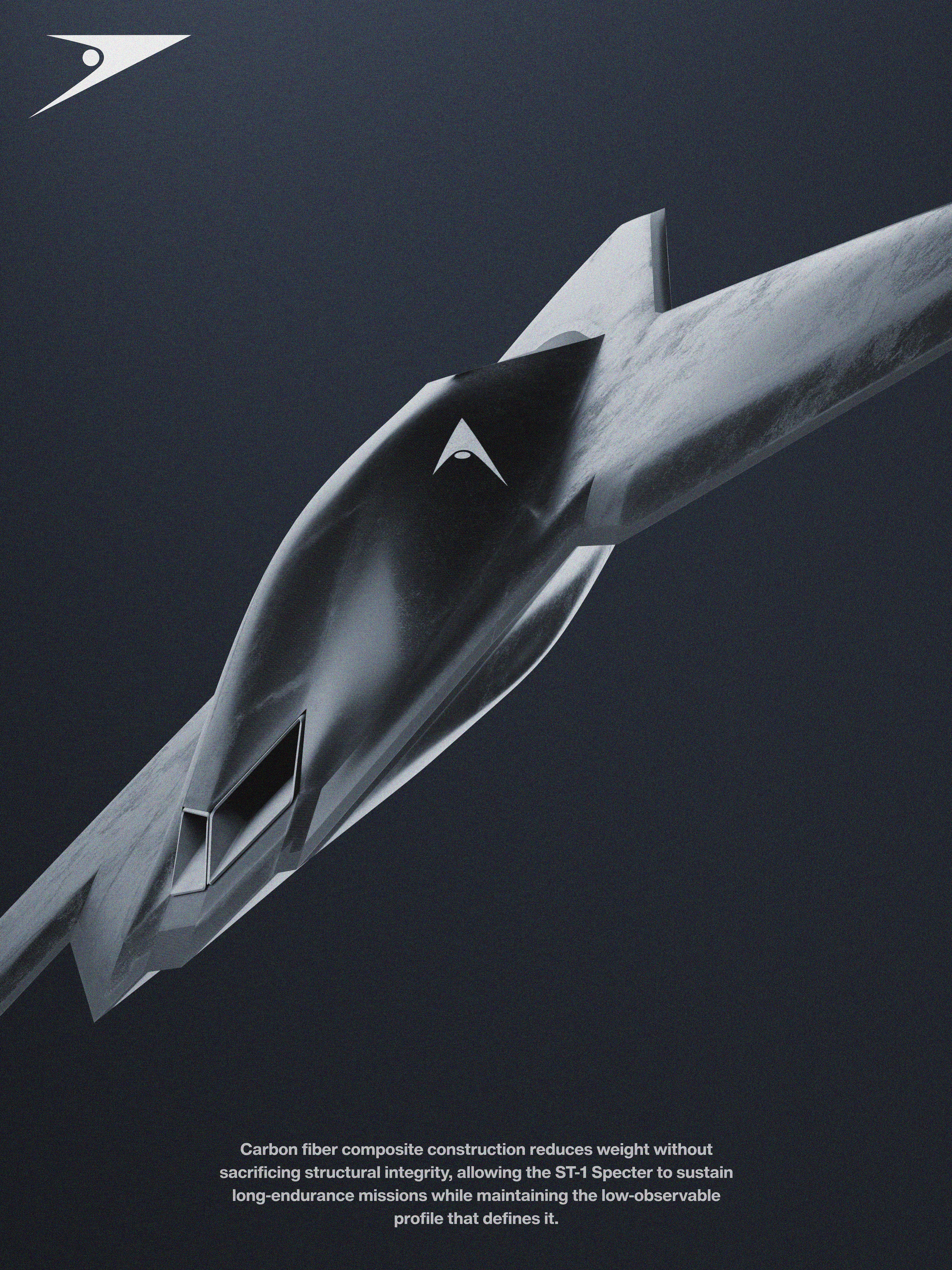
Slade Technologies is releasing its first named aircraft concept: the Specter, a tailless blended-wing-body unmanned combat air vehicle designed for long-duration loitering, signals intelligence collection, and low observable ingress.
The BWB configuration is a deliberate engineering choice. Distributing lift across the entire airframe reduces induced drag and extends on-station endurance without increasing platform size. Carbon fiber composite construction keeps structural weight low while supporting a low radar cross-section profile.
The Specter is built around a dual-use premise. The same airframe suited for SIGINT collection in a contested environment works equally well for border surveillance, maritime patrol, and persistent ISR in commercial and government applications.
This is a concept design. No hardware exists and development has not commenced. The Specter represents our design intent and the engineering philosophy behind how Slade Technologies approaches system development.
View the SpecterOne of the first decisions we made was to stay narrow. One aircraft, built properly, rather than a portfolio of concepts. The engineering compounds instead of fragmenting, and every hour goes into the same airframe.
Specter is dual-use by design. The same low-observable airframe and low-cost manufacturing approach that serves a defense mission carries a commercial and allied path, which is a hedge against the long, uncertain timeline of government procurement.
We're in the design and IP development phase, with a physical scale model now in fabrication. No flight hardware yet. We say where we are plainly.
Slade Technologies is formally registered as an LLC. The company is founded on a single conviction: defense and aerospace systems carry costs the engineering alone doesn't justify. Decades of organizational overhead and legacy program structures account for the difference.
We're starting lean by design. One founder, no unnecessary overhead, and a clear-eyed view of what Phase 1 actually requires: define the technical approach, develop the IP, and build the foundation before we scale anything.
We're not pretending this is further along than it is. It's early. The work starts now.
Updates are posted as milestones are reached, not on a fixed schedule.